Welcome to SA Plugged’s Free Forex Trading Course South Africa. Please make sure to Bookmark this page to refer back to.
What Is Forex Trading?
Are you interested in the world of currency trading? If so, you might want to know more about the Forex market, which is the largest and most dynamic market on the planet. Every day, more than 2.5 trillion dollars are exchanged in the Forex market, involving central and commercial banks, corporations, institutional investors, hedge funds, and ordinary people like you and me.
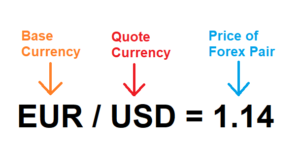
But what exactly is the Forex market? Well, it’s a place where you can trade currencies of different countries (as well as gold and silver). For instance, you can buy euros with US dollars, or sell Japanese yen for Canadian dollars. It’s like swapping one currency for another. However, you don’t have to deal with physical money: you can trade and work with your own base currency, and choose any currency pair you want to.
One of the best things about the Forex market is that you can use “leverage” to increase your profit potential. Leverage is the ratio of investment to actual value. For example, using R1,000 to buy a Forex contract with a R100,000 value is leveraging at a 1:100 ratio. The R1,000 is all you invest and all you risk, but the gains you can make may be much higher.
How do you make money in the Forex market? It’s simple: buy low and sell high! The profit potential comes from the fluctuations (changes) in the currency exchange market. Unlike the stock market, where you buy shares, Forex trading does not require physical purchase of the currencies, but rather involves contracts for amount and exchange rate of currency pairs.
The amazing thing about the Forex market is that regular daily fluctuations – in the regular currency exchange markets, often around 1% – are multiplied by 100!
How risky is Forex trading? You can only lose as much as your initial investment (also called your “margin”). The profit you may make is unlimited, but you can never lose more than the margin. You are strongly advised to never risk more than you can afford to lose.
How do I start trading?
If you wish to trade using South Africa’s Top Forex Broker, you
must first register, either for a demo account to start practicing or a real account to start earning. Register Here
How do I monitor my Forex trading?
We highly recommend Tradingview.com. You have full control to monitor your trading
status, check scenarios.
Free Trading Courses:
What is Leverage, Pip & Spread ?
Leverage
Margin trading ratio, represented by leverage, allows traders to borrow money and trade in larger deals. Leverage enables traders to use more money than they have in their account, amplifying their potential profits and losses. By leveraging their account balance, traders can place bigger trades. Small trades are unfashionable as they only return small profits and losses for every pip rate changes, and currency rates move very slowly. Therefore, leveraging helps traders to trade in larger deals, which can result in higher profits and losses.
PIP ( Price Interest Point )
A pip is the smallest unit by which the price of a currency pair can change. It represents the smallest change in a currency pair and is typically the fourth decimal point, although many brokers quote using the fifth decimal. However, the fifth decimal doesn’t really affect the price as it changes really quick.
For currency pairs that include the U.S. dollar, a pip is 1/10,000 of a dollar, whereas when the currency pair includes the yen, a pip is 1/100 of a yen because the yen is closer in value to 1/100 of other major currencies.
Spread
In Forex trading, brokers provide two prices for currency pairs: the bid and ask price. The bid price is the amount at which a trader can sell the base currency, while the ask price is the amount at which they can buy the base currency. The difference between these two prices is called the spread, which is how “no commission” brokers make their money.
The spread is measured in pips, with most currency pairs having a pip value of 0.0001. For example, consider the following quote: EUR/USD = 1.1051/1.1053. The spread in this case is 0.0002, which is equivalent to 2 pips.
Pro Tips To Follow
- Starting Small and gradually building your investment portfolio is a prudent approach to trading. Additionally, it’s recommended to limit the number of positions you open at a time. The more positions you have, the more difficult it becomes to weigh them carefully, which increases the likelihood of losses.
- Using a stop-loss order is one of the most important pieces of advice that any forex trading professional would give to beginners. Regardless of your trading strategy, forgetting to use a stop-loss order means that you haven’t limited your losses. A stop-loss order helps you eliminate losses, especially when the rates change unexpectedly.
- The 1% rule is a widely recognized principle in trading that advises traders to avoid risking more than 1% of their trading account per any single trade. This rule is designed to help traders manage their risk efficiently and avoid large losses on single trades, allowing them to stay in the game for a longer period of time. The 1% rule is especially important for day traders, who need to have strong risk management skills to succeed in the fast-paced trading style.
- Stick To Your Strategy. Successful traders have a well-defined plan and are committed to sticking to it. It’s important to document your plan on paper and follow it systematically. Record the prices of each transaction and the rationale behind your strategy to analyze it later.
- Follow The Trend. Market trends are a reflection of what’s to come. It’s best to avoid going against the trend as it often results in losses. Instead, analyze the trend and look for a favorable position before making any transactions. This way, you can make informed decisions and maximize your profits.
- Study Your Charts. Each foreign market has its own unique tracking systems and charts. It is important to differentiate between multiple time frames before making each trade. For example, you can check the daily and hourly charts to identify the best time for opening and closing positions. Additionally, weekly graphs are ideal for observing trends.
Popular Searched Categories: