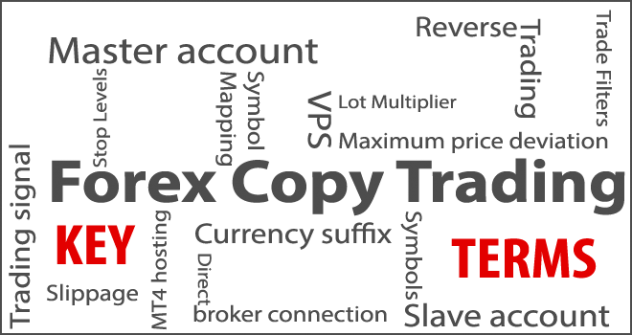
Here is a list of some forex trading terminologies that you might encounter in your trading journey:
Bid and ask: The bid price is the highest price that a buyer is willing to pay for a currency pair, while the ask price is the lowest price that a seller is willing to accept for a currency pair. The difference between the bid and ask prices is called the spread.
Lot: A standard unit of trading in the forex market, which is equivalent to 100,000 units of the base currency in a currency pair. For example, one lot of EUR/USD is 100,000 euros.
Leverage: The use of borrowed funds to increase the potential return of an investment. In forex trading, leverage allows traders to control larger positions with a smaller amount of capital. However, leverage also increases the risk of losing more than the initial investment.
Pip: A pip is the smallest unit of price movement in the forex market, usually equal to the fourth decimal place in most currency pairs. For example, if EUR/USD moves from 1.1850 to 1.1851, that is a one pip increase. Some currency pairs, such as the Japanese yen pairs, have a pip value of the second decimal place.
Stop loss and take profit: A stop loss order is an instruction to close a position at a predetermined price level, usually below the entry price, to limit the loss in case the market moves against the trader. A take profit order is an instruction to close a position at a predetermined price level, usually above the entry price, to lock in the profit in case the market reaches the desired target.
Here is another list of some slang used in forex trading that you might find interesting:
Bull and bear: A bull is a trader who believes that the price of a currency pair will rise, while a bear is a trader who believes that the price of a currency pair will fall. The terms are derived from the way these animals attack their opponents: a bull thrusts its horns up, while a bear swipes its paws down.
Long and short: A long position is when a trader buys a currency pair, expecting that the price will increase, while a short position is when a trader sells a currency pair, expecting that the price will decrease.
Breakout: A breakout is when the price of a currency pair moves beyond a certain level of support or resistance, indicating a possible change in trend or momentum.
Consolidation: A consolidation is when the price of a currency pair moves within a narrow range, indicating a period of indecision or low volatility.
Trend: A trend is the general direction of the price movement of a currency pair over a period of time. A trend can be either upward (bullish), downward (bearish), or sideways (range-bound).
Volatility: Volatility is a measure of how much the price of a currency pair fluctuates over a period of time. High volatility means that the price moves rapidly and unpredictably, while low volatility means that the price moves slowly and steadily.